Cybersecurity
Evaluating the Best CSPM Software for Multi-Cloud Environments
Selecting the right Cloud Security Posture Management platform requires understanding how different enterprise tools identify misconfigurations and map compliance standards across diverse cloud architectures.
Securing enterprise infrastructure across multiple cloud providers requires more than native monitoring tools; it demands a unified approach to configuration governance. When security architects evaluate the best CSPM software for multi-cloud environments, the core decision centres on selecting a platform that normalises visibility across disparate architectures without disrupting active workloads. Failing to establish this centralised oversight leaves organisations vulnerable to configuration drift, where a single overly permissive identity policy or exposed storage bucket compromises the broader network.
To evaluate these enterprise platforms, we rely exclusively on verifiable vendor documentation and technical specifications verified in November 2026. Review how Atlas verifies guidance to understand our strict focus on documented deployment mechanisms, supported cloud environments, and compliance mapping capabilities. This analysis does not incorporate first-hand testing, independent benchmark scores, or client deployment metrics, nor does it invent pricing models for enterprise software that requires a custom quote.
The Challenge of Multi-Cloud Posture Management
Enterprise infrastructure operates across multiple cloud service providers simultaneously, distributing workloads among environments like Amazon Web Services, Microsoft Azure, and Google Cloud Platform. While this multi-cloud strategy provides architectural flexibility, it fundamentally fragments the security perimeter. Infrastructure teams must manage discrete configurations across disparate consoles, increasing the probability of exposing a storage bucket or provisioning an identity access policy with overly permissive rights.
Each cloud provider operates with distinct networking defaults, identity models, and deployment mechanisms. Attempting to track these distinct environments using only native, single-cloud monitoring tools creates operational blind spots. Security teams struggle to normalise data across platforms, making it difficult to maintain a consistent baseline for compliance or to implement effective workflow automation for remediation. The administrative burden of manually auditing continuous deployments across AWS, Azure, and GCP quickly exceeds the capacity of standard security operations.
Dedicated Cloud Security Posture Management platforms address this fragmentation by centralising infrastructure visibility and governance. An effective CSPM tool connects across all active cloud environments to continuously identify misconfigurations and map them against strict compliance frameworks. Selecting the best CSPM software for multi-cloud architectures requires evaluating how these platforms normalise security data across distinct providers. This process determines how efficiently an organisation secures its distributed assets without impeding deployment velocity.
Evaluation Methodology for CSPM Platforms
Resolving this struggle for a consistent baseline requires dedicated Cloud Security Posture Management platforms that normalise visibility across AWS, Azure, and Google Cloud. To determine the capabilities of the best CSPM software for multi-cloud environments, we rely on a strict framework based entirely on verifiable vendor documentation. Review how Atlas verifies guidance to see our focus on practical deployment mechanisms, agentless scanning techniques, and the ability to map misconfigurations directly to established regulatory frameworks.
When enterprise security teams assess these platforms, verifying the exact infrastructure environments supported by each vendor remains the necessary first step. The following table illustrates the documented multi-cloud coverage and core compliance capabilities for several of the leading CSPM tools evaluated in this guide.
| Platform | Supported Environments | Compliance Mapping |
|---|---|---|
| Wiz | AWS, Azure, GCP, OCI, Alibaba Cloud | API-driven misconfiguration scanning |
| Prisma Cloud | AWS, Azure, Google Cloud, Oracle Cloud, Alibaba Cloud | Continuous compliance monitoring |
| Aqua Security | Multi-cloud environments | CIS benchmarks, PCI-DSS |
| CrowdStrike Falcon Cloud Security | AWS, Azure, Google Cloud, Kubernetes | Posture findings unified with Falcon threat data |
| Orca Security | AWS, Azure, Google Cloud, Oracle Cloud, Alibaba Cloud, Kubernetes | 150+ frameworks and CIS benchmarks |
Reviewing this baseline coverage reveals that major platforms prioritise API-driven connections to standardise governance across the largest infrastructure providers. This architectural approach allows security teams to centralise their posture management without deploying proprietary agents across thousands of distinct compute instances. Because deployment scales vary drastically depending on an organisation’s active cloud footprint and workflow requirements, vendors omit standardised subscription tiers. Procuring any of these enterprise platforms requires a custom quote tailored to the specific volume and complexity of the monitored assets.
Wiz
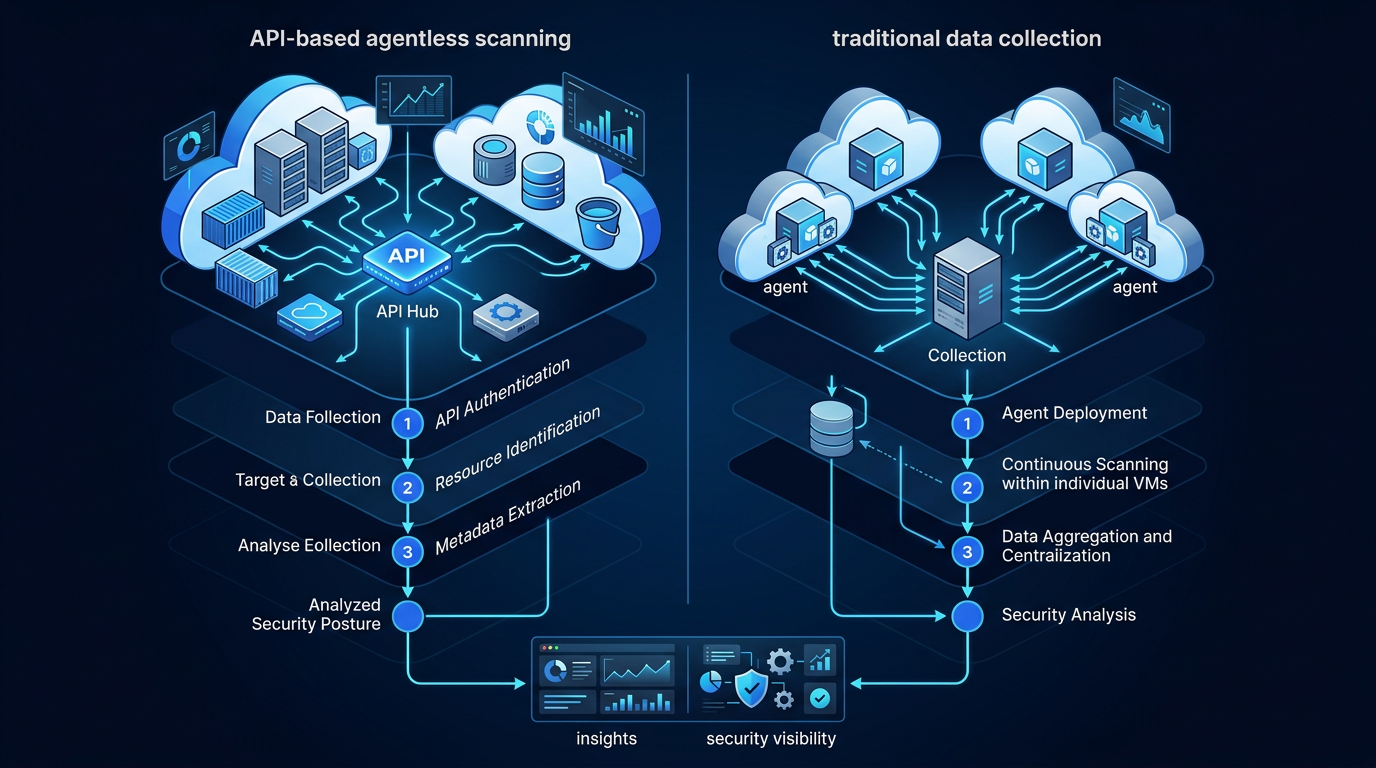
Baseline multi-cloud coverage confirms that modern enterprise platforms prioritise rapid deployment across diverse infrastructure. Wiz addresses this need through an agentless Cloud Security Posture Management architecture. Rather than requiring security teams to deploy and maintain software agents on every virtual machine or container, the platform connects directly to the cloud provider’s management layer. This API-driven approach allows infrastructure teams to scan their environments without disrupting active workloads or altering existing deployment configurations.
Once connected, Wiz scans the infrastructure to identify misconfigurations that could expose assets to unauthorised access. This API integration supports environments running on Amazon Web Services, Microsoft Azure, Google Cloud Platform, Oracle Cloud Infrastructure, and Alibaba Cloud. Consolidating data from these distinct providers into a single operational view allows security teams to evaluate their posture without toggling between disparate native consoles.
This broad compatibility provides the visibility required to enforce uniform governance policies across an organisation’s entire footprint. The platform evaluates discovered assets against established compliance frameworks. This helps teams pinpoint which instances or storage buckets deviate from required standards before feeding alerts into standard workflow automation pipelines. Because Wiz operates as an enterprise-grade platform tailored to complex multi-cloud deployments, organisations must contact the company directly for a custom quote based on their specific infrastructure scale.
Palo Alto Networks Prisma Cloud
While API-driven platforms facilitate rapid deployment across major providers, enterprise security teams also require uninterrupted surveillance to prevent configuration drift over time. Palo Alto Networks addresses this through Prisma Cloud, which extends beyond point-in-time scanning to deliver continuous visibility. For organisations evaluating the best CSPM software for multi-cloud environments, Prisma Cloud manages posture across a broad spectrum of infrastructure providers. The platform supports Amazon Web Services, Microsoft Azure, Google Cloud, Alibaba Cloud, and Oracle Cloud, enabling security teams to monitor sprawling infrastructure from a unified interface.
Maintaining this visibility is critical for enforcing corporate governance and meeting regulatory requirements across disparate cloud architectures. Prisma Cloud provides compliance monitoring capabilities that track configuration states against industry benchmarks. By continuously evaluating the infrastructure layer across these varied environments, the platform identifies misconfigurations before they violate established security policies.
Integrating these insights into daily operations prevents monitoring systems from overwhelming security operations centres. Because enterprise platforms like Prisma Cloud continuously evaluate configuration data, administrators can incorporate the findings into standard operational procedures. Teams often route posture alerts into existing ticketing systems, enabling efficient workflow automation that directs remediation tasks to the appropriate infrastructure owners. Pricing for Prisma Cloud requires a custom quote based on the organisation’s specific cloud footprint and deployment scope.
CrowdStrike Falcon Cloud Security
While dedicated cloud infrastructure platforms provide extensive compliance tracking across major providers, many enterprises seek to integrate posture management directly into their broader security operations. CrowdStrike Falcon Cloud Security addresses this by consolidating cloud security posture within its wider enterprise protection platform. This unified approach allows security teams to manage infrastructure misconfigurations alongside workload protection and threat intelligence, eliminating the need to maintain a separate console exclusively for cloud governance.
For organisations managing complex multi-cloud deployments, isolating posture data from active threat monitoring can create operational silos. By embedding CSPM capabilities into the broader Falcon ecosystem, the platform streamlines daily security operations. Security operations centres can utilise this consolidated architecture to correlate structural configuration weaknesses with potential active threats. This enables security teams to treat cloud posture not merely as a compliance exercise, but as a critical component of their active defence strategy.
To effectively manage the sheer scale of modern cloud environments, enterprise teams must ensure that alerts do not overwhelm their analysts. CrowdStrike facilitates this by allowing security engineers to push posture alerts into existing ticketing and remediation pipelines. Implementing reliable workflow automation ensures that misconfigurations identified across various cloud providers are routed immediately to the appropriate infrastructure teams for correction, thereby reducing the overall window of exposure. Because enterprise environments vary significantly in scale and complexity, the vendor does not publish standard pricing tiers; acquiring this platform requires a custom quote.
Orca Security
While consolidated enterprise platforms embed cloud governance within broader security operations, other vendors focus on eliminating the friction of deploying software across distributed environments. Orca Security takes this alternative approach, using a distinct deployment model designed to assess infrastructure without modifying the cloud workloads themselves.
Rather than forcing administrators to install and maintain software agents within every virtual machine or container, Orca relies entirely on an agentless scanning architecture. The vendor calls this data collection mechanism SideScanning. This technology evaluates the runtime block storage of cloud assets out-of-band. The platform then identifies infrastructure misconfigurations and compliance deviations without impacting the performance of active applications.
For teams evaluating the best CSPM software for multi-cloud deployments, managing agent lifecycles across diverse cloud providers frequently creates substantial operational overhead. Orca’s deployment model eliminates this burden by integrating directly at the cloud provider level. By removing the need for ongoing agent maintenance, security personnel can redirect engineering resources toward workflow automation and the rapid remediation of identified posture risks.
Because computing footprints vary heavily between deployments, Orca Security does not publish standard subscription rates. Enterprise buyers must request a custom quote based on their specific cross-cloud architecture, supported provider environments and the total volume of monitored workloads.
Aqua Security
While out-of-band data collection models reduce the operational friction of deploying security software, enterprise teams must also ensure that identified misconfigurations align strictly with regulatory mandates. Aqua Security builds its Cloud Security Posture Management offering around this need, focusing on continuous environment scanning and automated regulatory tracking. Rather than simply identifying open ports or unrestricted access policies, the platform evaluates cloud infrastructure to determine how specific misconfigurations affect an organisation’s overall compliance posture.
To bridge the gap between technical infrastructure settings and governance requirements, Aqua Security maps its detection findings directly to established industry standards. The platform translates individual cloud misconfigurations into actionable compliance data, explicitly supporting frameworks like the CIS benchmarks and PCI-DSS. This automated mapping allows governance teams to track compliance parameters for auditors without manually cross-referencing specific cloud provider settings against complex regulatory documentation.
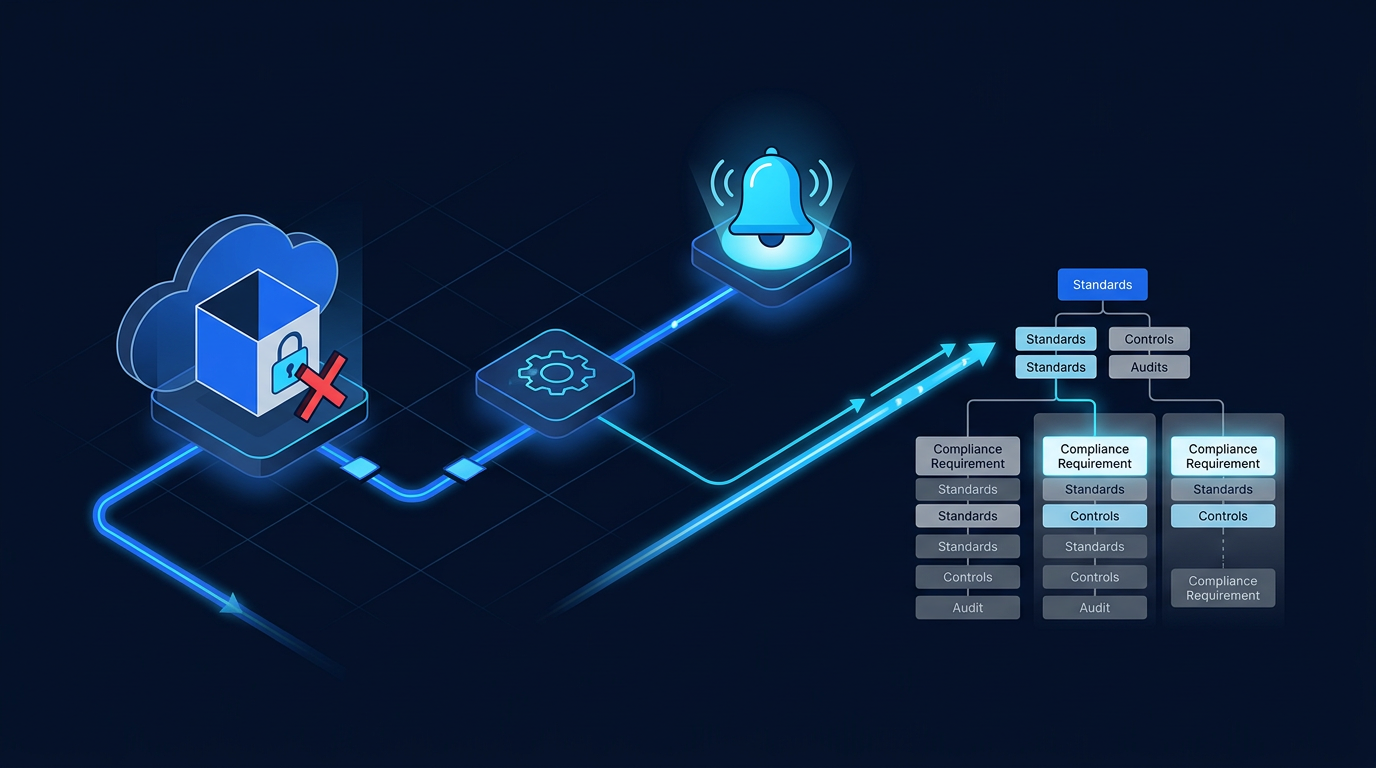
Integrating these compliance frameworks into daily operations supports broader workflow automation, helping administrators prioritise remediation based on regulatory risk rather than technical severity alone. By continuously scanning cloud environments against these built-in rule sets, Aqua Security enables teams to maintain audit readiness across distributed infrastructure. Like the other enterprise platforms evaluated in this category, acquiring this capability requires organisations to request a custom quote based on their specific multi-cloud footprint.
Analysis of Multi-Cloud CSPM Capabilities
Mapping infrastructure settings to established frameworks, as Aqua Security does, highlights a broader operational requirement across the CSPM market. Enterprise platforms must balance deep visibility with automated governance. A comparison of these tools reveals two primary technical strategies: agentless, API-driven data collection to reduce deployment friction, and continuous compliance monitoring to maintain strict regulatory alignment.
Evaluating these architectural differences requires a clear understanding of where each platform operates and how it extracts security data. The following table outlines the explicitly supported cloud environments and core operational mechanisms for the reviewed platforms. This information helps teams match their specific infrastructure footprint to a compatible governance tool.
| Platform | Explicitly Supported Environments | Core Posture Management Mechanism |
|---|---|---|
| Wiz | AWS, Azure, GCP, OCI, Alibaba Cloud | Agentless API connections |
| Palo Alto Networks Prisma Cloud | AWS, Azure, Google Cloud, Oracle Cloud, Alibaba Cloud | Continuous compliance monitoring |
| Aqua Security | Multi-cloud infrastructure | Misconfiguration mapping to CIS and PCI-DSS |
| CrowdStrike Falcon Cloud Security | AWS, Azure, Google Cloud, Kubernetes | Agentless discovery within the Falcon platform |
| Orca Security | AWS, Azure, Google Cloud, Oracle Cloud, Alibaba Cloud, Kubernetes | Agentless SideScanning |
The comparison demonstrates a strong consensus among enterprise platforms regarding cloud provider coverage. Wiz and Prisma Cloud support the exact same major providers—including AWS, Azure, Google Cloud, Oracle Cloud, and Alibaba Cloud—ensuring broad compatibility for complex architectures. Execution, however, differs at the infrastructure level. Wiz and Orca both scan without agents, CrowdStrike folds posture findings into its wider Falcon platform, and Aqua Security maps misconfigurations to CIS and PCI-DSS. This translation process frequently relies on workflow automation to manage remediations at scale.
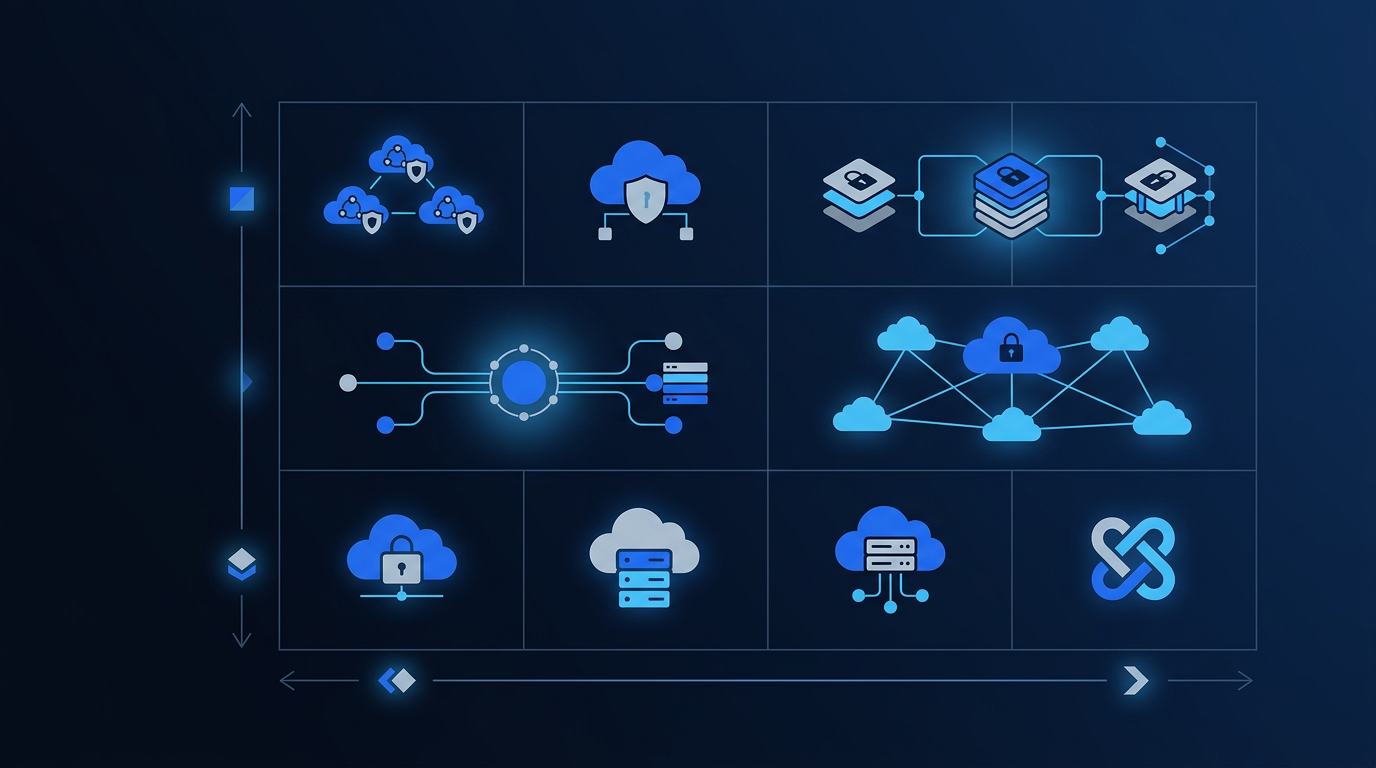
The distinction between these posture management tools lies in their primary operational focus. Solutions prioritising out-of-band data collection minimise workload disruption, whereas platforms built around continuous framework mapping streamline the audit process. Selecting the appropriate architecture depends directly on existing security operations and deployment constraints.
Decision Framework for Enterprise Buyers
Beyond comparing deployment models and supported environments, enterprise buyers must structure their procurement decisions around specific operational parameters. Selecting the most effective cloud security posture management software requires aligning a platform’s capabilities with existing multi-cloud footprints and internal governance protocols. Rather than seeking a universally superior tool, security architects should evaluate how these platforms integrate into daily operational routines.
A structured evaluation path requires prioritising three core operational needs. First, teams managing diverse environments must assess coverage parity. Organisations running workloads across AWS, Azure, Google Cloud, Oracle Cloud, and Alibaba Cloud should verify that their chosen vendor, such as Wiz or Palo Alto Networks, provides equivalent visibility across all hosted assets. Second, buyers must evaluate how the platform handles incident response. Introducing comprehensive visibility without mature workflow automation often causes alert fatigue rather than actionable remediation.
Finally, regulatory obligations dictate the need for specific compliance tracking mechanisms. Security leaders must confirm whether the platform maps misconfigurations directly to required frameworks, such as the CIS benchmarks and PCI-DSS mapping offered by Aqua Security, or the 150+ compliance frameworks documented by Orca. Because these enterprise solutions must accommodate vast, highly customised cloud architectures, vendors do not offer public pricing tiers. Procurement teams must request a custom quote tailored to their deployment scale and technical requirements.
Practical Steps for Cross-Cloud Governance
Once an enterprise selects a platform that fits its multi-cloud footprint, the focus shifts to operationalising the deployment without overwhelming security teams. Implementing cloud security posture management software requires a phased rollout rather than a sudden, comprehensive activation across all environments. Activating every governance rule simultaneously causes alert fatigue, obscuring critical misconfigurations beneath a flood of low-priority notifications. Establishing cross-cloud governance demands a systematic approach to policy enforcement and continuous compliance monitoring.
- Phase the deployment by connecting the CSPM tool to non-production environments first, allowing teams to tune policies and test data integrations before applying rules to production workloads.
- Prioritise alert remediation based on severity and context, focusing initially on publicly accessible misconfigurations and identity access issues rather than attempting to resolve all compliance violations simultaneously.
- Map internal security policies to standard frameworks natively supported by the platform, establishing a baseline for continuous compliance monitoring across the organisation’s chosen infrastructure.
After establishing these foundational controls, security teams must refine their incident response procedures to sustain governance. Integrating the CSPM platform with existing ticketing systems and workflow automation routes identified misconfigurations directly to the responsible infrastructure owners. This disciplined process transforms passive visibility into active remediation, maintaining a secure posture as multi-cloud environments scale.
Frequently asked questions
How does agentless CSPM differ from traditional agent-based cloud security?
Traditional agent-based security requires administrators to install and maintain individual software components on every virtual machine or container within the infrastructure. This approach can create operational friction and consume local compute resources. Agentless Cloud Security Posture Management bypasses this requirement by connecting directly to the cloud provider’s management layer via API. This allows security teams to scan the environment for misconfigurations out-of-band, providing comprehensive visibility without altering existing deployment configurations or impacting the performance of active workloads.
What role do CIS benchmarks play in cloud security posture management?
The Center for Internet Security (CIS) benchmarks provide globally recognised best practices for securing IT systems and data. In the context of cloud security posture management, these benchmarks serve as a foundational baseline for evaluating infrastructure configurations. Enterprise CSPM platforms map detected misconfigurations directly to these established standards, allowing security teams to translate technical settings into actionable compliance data. This automated mapping ensures that cloud environments maintain strict alignment with industry-accepted security protocols.
How do enterprise CSPM platforms handle custom application configurations?
Enterprise posture management tools primarily focus on the underlying cloud infrastructure rather than the proprietary code of custom applications. These platforms evaluate the configuration of the environment hosting the application, such as identity access management policies, network security groups, and storage bucket permissions. While they do not typically parse custom application logic, they ensure that the infrastructure supporting those applications adheres to strict governance standards, thereby reducing the attack surface for the deployed software.
Can posture management tools automatically remediate detected vulnerabilities?
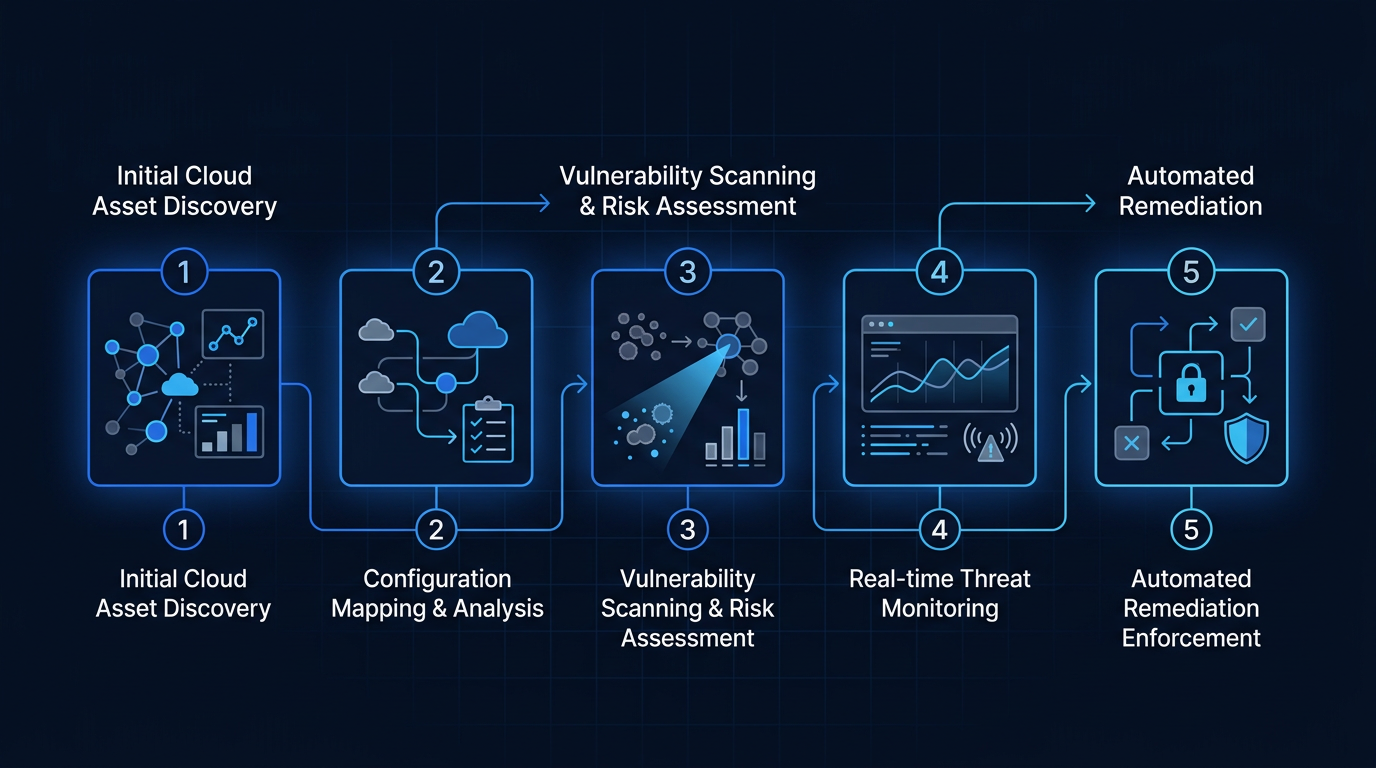
Many modern posture management platforms include automated remediation capabilities designed to correct common infrastructure misconfigurations without manual intervention. Security teams can configure these tools to automatically revert unauthorised changes, such as closing an exposed network port or restricting an overly permissive access policy. However, enterprise administrators typically apply automated remediation selectively, reserving it for clear policy violations to avoid inadvertently disrupting complex production workloads that may rely on specific, non-standard configurations.
How does a multi-cloud strategy impact the cost of security monitoring software?
Operating across multiple cloud providers generally increases the complexity of security monitoring, which can influence the overall cost of governance software. Enterprise platforms capable of normalising data across AWS, Azure, and Google Cloud typically require custom pricing quotes based on the total volume of monitored assets or the number of connected cloud accounts. Because these tools consolidate visibility into a single interface, organisations must weigh the software licensing costs against the operational expense of maintaining separate, native monitoring tools for each cloud provider.
What is the difference between Cloud Security Posture Management and Cloud Workload Protection Platforms?
Cloud Security Posture Management focuses on the control plane, identifying misconfigurations and compliance deviations within the cloud infrastructure itself. It evaluates how services are provisioned, networked, and secured at the architectural level. Conversely, Cloud Workload Protection Platforms operate at the data plane, securing the actual compute instances, containers, and serverless functions running within that infrastructure. While posture management prevents architectural exposure, workload protection defends the active applications and operating systems against runtime threats and malicious activity.
How frequently should an enterprise run posture scans across a production cloud environment?
Maintaining an accurate security baseline requires continuous or highly frequent scanning to detect configuration drift as soon as it occurs. Modern API-driven platforms are designed to monitor cloud environments continuously, evaluating infrastructure changes in near real-time without impacting workload performance. Relying on infrequent, point-in-time scans leaves organisations vulnerable to temporary misconfigurations that could be exploited before the next scheduled assessment. Continuous visibility is necessary for enforcing corporate governance and meeting strict regulatory requirements across dynamic cloud architectures.
Sources
- Wiz Product Documentation — Wiz, verified 2026-11
- Palo Alto Networks Security Documentation — Palo Alto Networks, verified 2026-11
- Aqua Security Product Documentation — Aqua Security, verified 2026-11
- CrowdStrike Falcon Cloud Security — CrowdStrike, verified 2026-11
- Orca Security Multi-Cloud Compliance — Orca Security, verified 2026-11
- Orca Security Platform Overview — Orca Security, verified 2026-11
AtlasProfitAI publishes independent guides for small-business teams. Read how we choose topics and check our work in our research methodology and advertising disclosure.