Best HR Compliance Software for Small Businesses (2026 Guide)
Explore the best HR compliance software for small businesses in 2026. Reduce audit risk, automate filings, centralize records, and keep policies up to date with clear audit trails.
Overview: The Best HR Compliance Software for Small Businesses in 2026
The best HR compliance software for small businesses in 2026 reduces audit risk, automates filings, and guides policy updates across federal, state, and sometimes global rules. It matters because penalties stack quickly, records must be exact, and rules change monthly. The right platform centralizes documents, automates reminders, and provides clear audit trails that stand up to scrutiny.
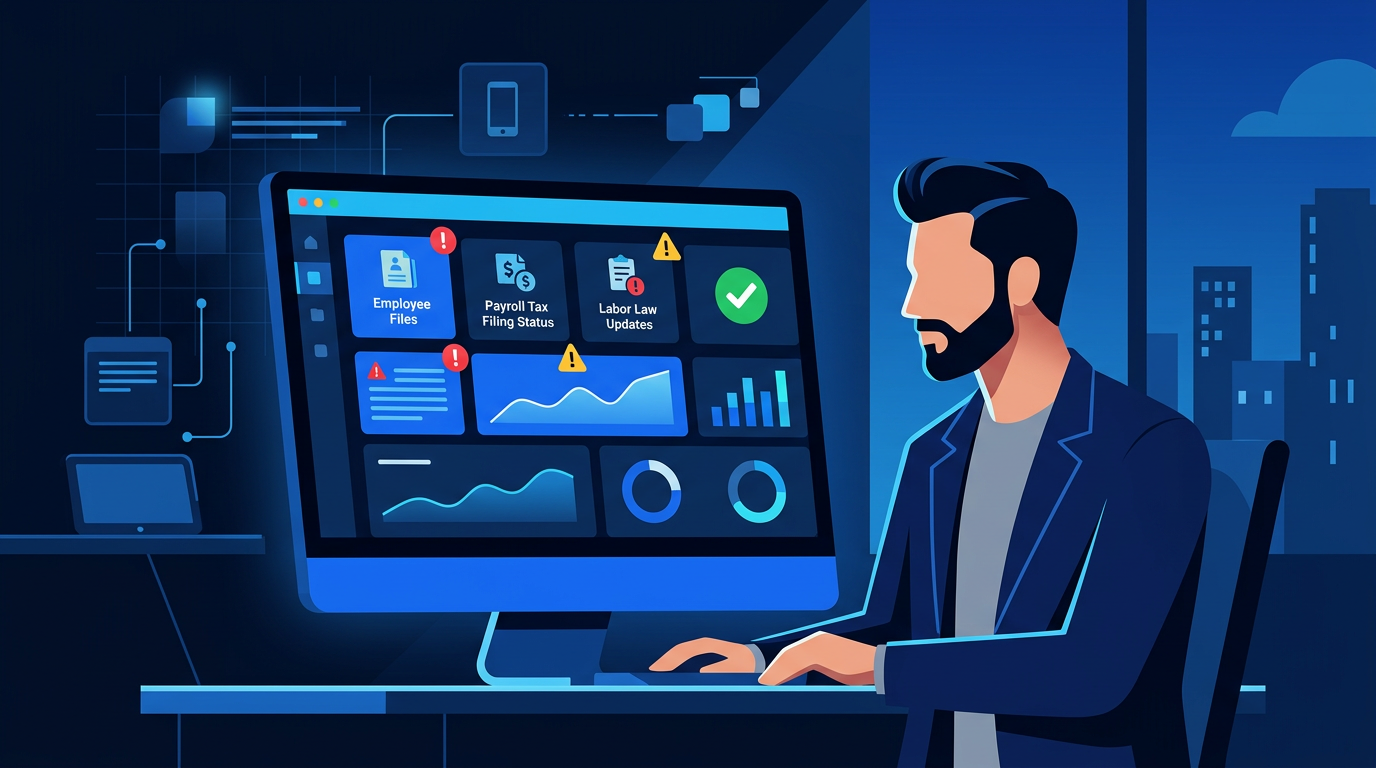
Common risks for small businesses include wage and hour misclassification, unpaid overtime, improper leave accruals, I-9 errors, late ACA filings, safety training gaps, and privacy breaches. Each risk has a different record-keeping burden. Software brings these into one dashboard, with alerts, workflows, and signed acknowledgments that prove due diligence.
Our evaluation focuses on core features, scalability, transparent pricing, third-party integrations, customer support SLAs, and security certifications. We weighed multi-state compliance depth, automated regulatory updates, and AI explainability. We also considered total cost of ownership, including add-ons for background checks, training libraries, and e-Verify connections.
Quick snapshot of top picks:
- Best overall: Balanced coverage, strong automation, and clean audit logs.
- Best for very small teams: Simple, low-cost, with guided setup.
- Best for multi-state compliance: Dynamic rule engine and rapid updates.
- Best for regulated industries: Granular permissions and defensible audit trails.
- Best for global teams: Country-specific rules and data residency options.
- Best value: Broad features at an SMB-friendly price.
- Key takeaways:
- Prioritize automated updates, I-9/e-Verify support, and wage-hour rule engines.
- Validate SOC 2 or ISO 27001, role permissions, and exportable audit logs.
- Expect add-ons for background checks, training courses, and storage.
- Multi-state support is the biggest differentiator in 2026.
- Map features to penalties you want to avoid, then price the ROI.
For a compliance workflow, see:
HR compliance small businesses → SMB buyer guide
Work through these points with each provider before you commit.
| with badges feature checkmarks option | Best for | What you get | Starting price |
|---|---|---|---|
| Entry tier | Trying it out | Core service, standard support | Lowest |
| Mid tier | Most readers | Full service, faster response times | Balanced |
| Premium tier | Heavy or complex use | Everything included, priority support | Highest |
How to Choose the Best HR Compliance Software for Small Businesses in 2026
Start with a core features checklist. Look for policy management with versioning, automated legal updates, and configurable acknowledgments. Ensure document retention and disposition rules match federal and state timelines. Confirm time-stamped audit trails for edits, sign-offs, and training completions. Verify report exports are in standard formats for audits and counsel review.
Payroll and tax compliance should include multi-state taxation, localities, and reciprocity rules. Confirm electronic W-2/1099 delivery, year-end forms, and filing support. ACA capabilities should include eligibility tracking, look-back periods, measurement methods, and 1094/1095 generation. Ask how the tool handles late corrections and amended filings to reduce manual work.
Hiring and onboarding needs accurate I-9 Section 1 and 2 workflows, e-Verify integration, and document retention controls. Look for prebuilt EEO and OFCCP data collection, adverse action steps for background checks, and consistent onboarding tasks by role and state. A structured workflow reduces onboarding errors and improves audit readiness from day one.
Time, leave, and wage-hour compliance depend on a robust rules engine. It should support FLSA overtime thresholds, weighted average overtime, state daily overtime, meal and rest breaks, and predictive scheduling ordinances. Paid leave accruals must handle carryover, front-loading, waiting periods, and local rules. Edge cases like multiple pay rates or split shifts should be supported.
Training and certification tracking requires role-based assignments, recurring cadence, and completion verification. Harassment prevention training must adapt to state-specific intervals. Safety training should include incident reporting and remediation workflows. Completion audits with timestamps, quiz scores, and certificates create defensible proof in investigations or litigation.
Data security and privacy are non-negotiable. Seek SOC 2 Type II or ISO 27001, encryption at rest and in transit, SSO/SAML, granular role permissions, and admin logs. If AI is used, ask for model explainability, data retention policies, and opt-out controls. Verify data deletion and export processes to satisfy privacy requests and offboarding.
Scalability and integrations mean seamless connections to HRIS, ATS, payroll, time tracking, accounting, and collaboration tools. Prebuilt connectors reduce implementation time. For growing teams, confirm multi-entity support, flexible org structures, and the ability to spin up new locations with inherited policies and localized rules.
Total cost of ownership includes base price, modules, add-ons, implementation, training, and support tiers. Map must-have features and remove . Clarify contract length, price caps on renewals, SLAs, and data export fees. Estimate three-year costs and include potential penalties avoided to understand true ROI.
Top Picks: Best HR Compliance Software for Small Businesses in 2026
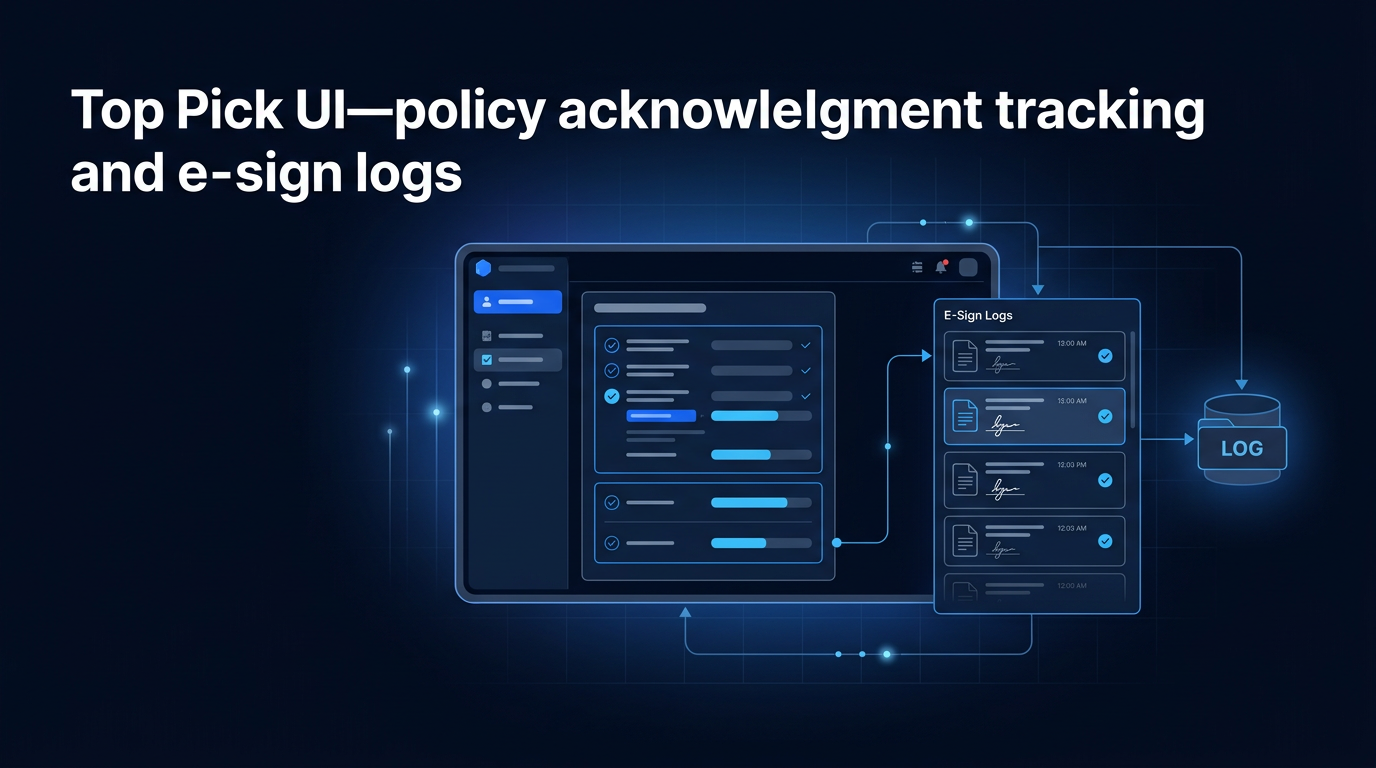
Best overall: Choose a platform with balanced compliance coverage, including automated law updates, I-9/e-Verify, wage-hour rules, ACA eligibility tracking, and role-based training. Clean UI and quick setup help small teams execute. Look for SOC 2 Type II and exportable audit logs to satisfy counsel and auditors without manual spreadsheet wrangling.
Best for very small teams (1–25 employees): Prioritize simplicity, low monthly per-employee pricing, and guided checklists. Essential features are I-9, basic handbook acknowledgments, leave policies, and state harassment training where required. A built-in onboarding wizard and templates reduce admin load for owner-operators and first-time HR leads.
Best for multi-state compliance: You need a dynamic rules engine that updates as states tweak wage, leave, and scheduling requirements. The system should generate state-specific policy notices, track acknowledgments, and adjust accruals in real time. Look for jurisdiction-aware timecards and alerts that flag risky schedules before payroll processing.
Best for regulated industries: Heavily regulated employers need granular permissions, field-level audit logs, and configurable retention periods. Seek advanced access controls, read-only legal views, and tamper-evident records. Built-in SOPs, e-signatures with full certificate chains, and incident tracking help pass internal and external audits.
Best for global teams: Focus on country-specific labor law libraries, native e-signatures, localized onboarding, and data residency options. Global privacy capabilities should include GDPR/UK GDPR rights workflows, DPA templates, and transfer mechanisms. Pay attention to multi-currency, holiday calendars, and local benefits eligibility logic.
Best value: An SMB-friendly plan should bundle core compliance features without forcing enterprise-priced upgrades. Expect policy management, onboarding, I-9, basic training tracking, and multi-state leave accruals. Transparent add-on pricing for background checks and expanded course libraries prevents surprise invoices during growth phases.
Payroll tax compliance guide
In-Depth Reviews: Leading HR Compliance Platforms Compared
An SMB suite with automated state updates, e-Verify, and robust wage-hour rules. Pros include intuitive onboarding, strong alerts, and report templates. Cons are limited custom reporting and premium pricing for training libraries. Ideal for 20–250 employees across several states. Pricing tiers scale per employee with optional add-ons.
Implementation: Typical deployment completes in 3–6 weeks. Admins can configure policies in days using templates. The learning curve is mild for HR generalists, with guided tours and contextual help. Expect a short knowledge ramp for payroll integration mapping and role-based permissions.
Strong for very small teams. It offers a guided compliance checklist, simple I-9, and essential policy acknowledgments. Pros are price and simplicity. Cons include lighter multi-state depth and fewer analytics. Ideal for 1–40 employees or first-time HR setups. Pricing is budget-friendly with options.
Implementation: Setup in under a week, often same day for core features. Minimal training required; short tutorial videos cover workflows. Limitations appear when expanding into complex leave laws or multi-entity structures, prompting upgrades or migrations later.
Best for multi-state complexity. Advanced rules engine handles city-level leave, predictive scheduling, and nuanced overtime calculations. Pros include rapid regulatory updates and proactive schedule alerts. Cons are steeper learning and higher mid-tier pricing. Ideal for retail, hospitality, and healthcare. Pricing reflects compliance depth and support SLAs.
Implementation: Plan for 4–8 weeks. Time tracking and scheduling configuration require careful testing. Provide managers with specific training on lawful scheduling and break enforcement. After go-live, alerts reduce routine exceptions and retroactive corrections.
Built for regulated industries. Pros include field-level logs, data retention automation, and configurable access. Cons are a heavier admin experience and higher implementation fees. Ideal for finance, healthcare, and government contractors. Pricing is modular, with governance and audit packs sold separately.
Implementation: Expect 6–10 weeks, including security reviews and SSO. Establish a change management path for policy approvals. Train compliance officers on evidence exports and incident workflows. Once standardized, audits become faster and less disruptive.
Global contractor and employee compliance. Pros include localized onboarding, contractor classification aids, and data residency options. Cons are limited deep payroll in some regions without partners. Ideal for distributed tech teams and agencies. Pricing mixes per-user fees and regional add-ons for country packs.
Implementation: 3–8 weeks depending on countries in scope. Confirm PII transfer mechanisms and DPA terms. Build a playbook for onboarding by region with country-specific tasks and required disclosures. Compliance dashboards help track acknowledgments across time zones.
Best PEOs for small businesses
Feature Deep Dive: Compliance Capabilities That Matter in 2026
Automated regulatory updates and policy versioning Automated updates reduce the time from law change to policy rollout. The system should tag impacted policies, propose redlines, and route approvals. Versioning must capture who changed what, when, and why, with comparisons. Automated acknowledgments push the new version to affected employees and log signatures with timestamps.
Electronic I-9, e-Verify, and document retention compliance Electronic I-9s should validate fields in real time, guide document selection, and enforce remote inspection rules where permitted. E-Verify integration must sync case statuses and prompt reverification. Retention controls should auto-purge or archive I-9s based on termination dates, with a destruction log to prove compliance during audits.
Wage and hour rules engine: overtime, breaks, predictive scheduling A modern rules engine handles federal and state overtime, weighted rates, split shifts, and daily overtime. It should flag missed meal or rest breaks and warn about clopening and predictable pay premiums. Predictive scheduling features should surface forecasting conflicts and create manager tasks to fix schedules before violations occur.
Benefits and ACA compliance: eligibility tracking, 1094/1095 reporting Track measurement and stability periods, variable hour status, and affordability thresholds. The system should generate 1094/1095 forms and store employee acknowledgments. When staffing or hours change, the platform should recalculate eligibility and send alerts. Edge cases like seasonals and multiple EINs require careful configuration.
Leave and accommodations: FMLA, paid family leave, state/local ordinances Leave modules should calculate eligibility, entitlement, accruals, and concurrent leaves. Policy templates must reflect state and city requirements. The platform should track interactive process notes for accommodations and maintain confidential records. Automated communications and tasks keep the process consistent and documented.
Training compliance: course libraries, reminders, completion audits A compliant training module includes harassment prevention, safety courses, and role-based paths. Automated reminders keep learners on schedule, and expirations trigger retraining tasks. Completion certificates, quiz scores, and attendance logs consolidate into an audit-ready packet. Managers should receive dashboards and exception reports for overdue courses.
Incident reporting and whistleblower workflows Provide confidential intake options, routing rules, and evidence attachments. Maintain on edits, comments, and status changes. Time-stamped actions and restricted views protect integrity. Reporting should separate PII and summarize trends for leadership without exposing identities or protected information.

Analytics and audit readiness: dashboards, exportable logs, SOC audit support Dashboards should track policy acknowledgments, I-9 status, leave balances, and training completion. Exportable logs simplify outside counsel requests and regulator audits. SOC audits require control evidence; your platform should provide documentation of access reviews, change logs, and data retention policies to accelerate control testing.
AI and Automation in HR Compliance Software (2026 Trends)
Policy suggestions and gap analysis with explainable AI Explainable AI can map new laws to your existing policies and highlight gaps. It should show the reasoning, source citations, and suggested language. Admins approve changes, creating a traceable decision record. This approach reduces legal review time while preserving human oversight and accountability.
Automated monitoring of law changes and rule mapping Continuous monitoring agents track federal, state, and local updates. When a change hits, the system maps it to affected modules—time tracking, leave, or training—and proposes updates. An update queue helps you prioritize by risk and deadline, with due dates, owners, and audit notes to demonstrate timely action.
Smart alerts to prevent violations before they occur Proactive alerts highlight risky schedules, expiring work authorizations, training lapses, or benefit eligibility shifts. The system should offer one-click remediations, like rescheduling shifts or assigning missing courses. Alert fatigue is real, so configure thresholds and consolidate low-risk notices into weekly summaries.
AI risks and guardrails: bias mitigation, privacy, and auditability Ensure your vendor documents data sources, model governance, and fairness testing. Sensitive attributes must be handled carefully, with minimization and masking where possible. Log model outputs, decisions, and human overrides for auditability. Provide opt-outs for automated actions and a clear RACI for legal review.
When to use AI vs. human legal review Use AI for triage, drafts, and monitoring. High-risk changes, terminations, investigations, or union contexts still warrant human legal review. Establish thresholds by jurisdiction and topic. Your policy should define when counsel must approve changes, preventing over-reliance on automation for nuanced interpretations.
Compliance Across Jurisdictions: Multi-State and Global Considerations
Handling conflicting state laws on wages, leave, and privacy Conflicts are inevitable. Your platform should prioritize the strictest applicable standard for covered employees. Map employees to work locations and remote addresses to apply the right rules. For privacy, treat consumer and employee data rights distinctly. Document the rationale when adopting company-wide standards that exceed minimums.
Local postings, notices, and acknowledgment tracking Jurisdictions require specific postings and notices. A good system stores digital posters, pushes location-specific notices, and tracks acknowledgments. For remote teams, digital notice delivery with read receipts and periodic reminders helps maintain compliance when physical posting is impractical or insufficient.
Cross-border data transfer, GDPR/UK GDPR, and data residency Global teams require lawful transfer mechanisms, like standard contractual clauses and transfer impact assessments. Data residency options can reduce risk by storing PII regionally. Your tool should support subject access requests, rectification, and deletion within statutory timelines, with audit logs for each action.
Contractor vs. employee classification across regions Misclassification risk spans wage, tax, and benefits. Tools should provide questionnaires, factor weighting by jurisdiction, and counsel-friendly reports. Automation reduces guesswork, but edge cases still need expert review. Reassess classifications periodically, especially when scope, control, or duration changes.
Templates and workflows for distributed, hybrid teams Distributed teams need location-aware onboarding, time capture, and leave policies. Build workflows that prompt location-specific tasks, benefits options, and training. Ensure SSO and MFA for remote access. For hybrid workers, tie policy application to primary work location and use periodic attestations to update assignments.
Pricing, ROI, and Hidden Costs for Small Businesses
Common pricing models: per-employee/month, module-based, bundles Most vendors charge per employee per month. Some sell modules—compliance, time, benefits, training—while others bundle into tiers. Watch minimums, annual prepay discounts, and price locks. Calculate breakeven based on headcount growth and expected feature adoption over a two- to three-year horizon.
Add-on costs: training libraries, filings, background checks, storage Expect extra fees for training catalogs, background checks, e-Verify, and benefits filings. Storage overages can surprise you if you upload policy videos or retain historical documents. Ask for a rate card. Confirm whether SMS reminders or multilingual content cost extra to avoid unexpected monthly spikes.
Implementation and migration fees: timelines and tips to reduce cost Implementation can range from self-serve to white-glove. Data migration, SSO, and custom reports often incur fees. Reduce costs by cleaning data, standardizing job titles, and consolidating policies before kickoff. Assign an internal project owner and agree on a precise scope to avoid change orders.
Calculating ROI: avoided penalties, time saved, turnover reduction ROI often comes from avoided fines for I-9 errors, wage-hour mistakes, or missed training. Quantify admin time saved from automated updates and filing prep. Better documentation reduces dispute time and legal costs. Training completion and policy clarity can lower turnover in frontline roles, compounding savings.
Negotiation tips and contract red flags Push for after year one, caps on annual increases, and free sandbox environments. Insist on data export rights, breach notification timelines, and uptime SLAs with credits. Red flags include punitive overage fees, vague AI data usage, and restrictive termination clauses that trap your data or inflate exit costs.
Implementation Guide: Rolling Out HR Compliance Software Smoothly
data cleanup, role mapping, policy inventory
Work through these points with each provider before you commit.
Start with a clean roster, accurate locations, and standardized roles. Inventory policies and training requirements by jurisdiction. Define data owners and approvers. Map current processes for I-9, leave, and discipline to identify gaps. Decide on retention periods and access permissions before imports.
Phased rollout plan for SMBs: pilot, train, expand Pilot with one department or location. Validate time capture, leave accruals, and onboarding steps. Train managers first, then employees. Expand in waves, applying lessons learned to templates. Use change logs to document improvements and decisions for later audits or new admin onboarding.
Change management: manager enablement and employee training Managers enforce schedules, approve time, and coach policy adherence. Provide concrete job aids, example scenarios, and SLAs. Employees need short, mobile-friendly tutorials and clear deadlines. Track completion and follow up on exceptions the same week to avoid compounding compliance debt.
Integration best practices: payroll, time tracking, SSO Confirm system of record for each data field. Use SSO to simplify access and improve security. For payroll and time, test multi-state tax withholding and overtime calculations with sandbox runs. Schedule nightly syncs and set alerting for failed jobs. Maintain a runbook for support escalation.
Ongoing governance: ownership, audits, and continuous improvement Assign a compliance steering group with HR, legal, and IT. Conduct quarterly audits, review alerts, and retire stale policies. Track regulatory horizon changes and prepare drafts ahead of effective dates. Measure KPIs like late acknowledgments, missed trainings, and corrected schedules, then target improvements each quarter.
Conclusion
HR compliance software in 2026 is your control tower for changing laws, accurate records, and proactive alerts. Choose a platform that aligns with your risk profile, states, and growth plan. Start with a focused pilot, validate wage-hour and I-9 workflows, then scale. Next step: shortlist two vendors and schedule live demos with your real data scenarios.
FAQ
What is the most important feature in the best HR compliance software for small businesses in 2026?
Automated regulatory updates with policy versioning is the top feature. It shortens the gap between law changes and policy rollout, and it captures approvals and acknowledgments with timestamps. Combined with multi-state rule engines for wage-hour and leave, it prevents violations before payroll runs and reduces emergency fixes.
How does HR compliance software help with I-9 and e-Verify accuracy?
It guides Section 1 and 2 completion, validates fields, and prompts correct document combinations. Integrated e-Verify syncs case statuses and reverification reminders. Retention automation purges or archives I-9s on schedule with destruction logs. These controls reduce technical errors and produce clean audit evidence quickly.
Do small businesses with under 25 employees really need compliance software?
Yes, because even small fines and back pay can exceed annual subscription costs. Tools centralize policies, acknowledgments, and required trainings. They streamline I-9s, manage paid leave rules, and generate audit-ready logs. For micro teams, choose a lightweight plan with templates and guided setup to keep costs contained.
How should I evaluate multi-state compliance capabilities?
Test real scenarios: daily overtime in California, NYC safe and sick leave, and predictive scheduling rules. Verify state-specific policy acknowledgments and accrual calculations. Confirm alerts for risky schedules and eligibility shifts. Look for rapid update cadence when laws change, and view a changelog to prove timeliness.
What security certifications should vendors have?
Prefer SOC 2 Type II or ISO 27001, plus encryption at rest and in transit. Require SSO/SAML, MFA, role-based permissions, and admin logs. Ask for data retention policies, backup locations, and incident response timelines. If AI is used, request documentation on training data, explainability, and opt-out controls.
How do I calculate ROI on HR compliance software?
Estimate avoided penalties for I-9 errors, wage-hour violations, and missed trainings. Add time saved on filings, audits, and corrections, multiplied by hourly rates. Include reduced legal exposure from better documentation and fewer disputes. Compare these savings to total cost of ownership over two to three years for a fair view.
Comparison overview
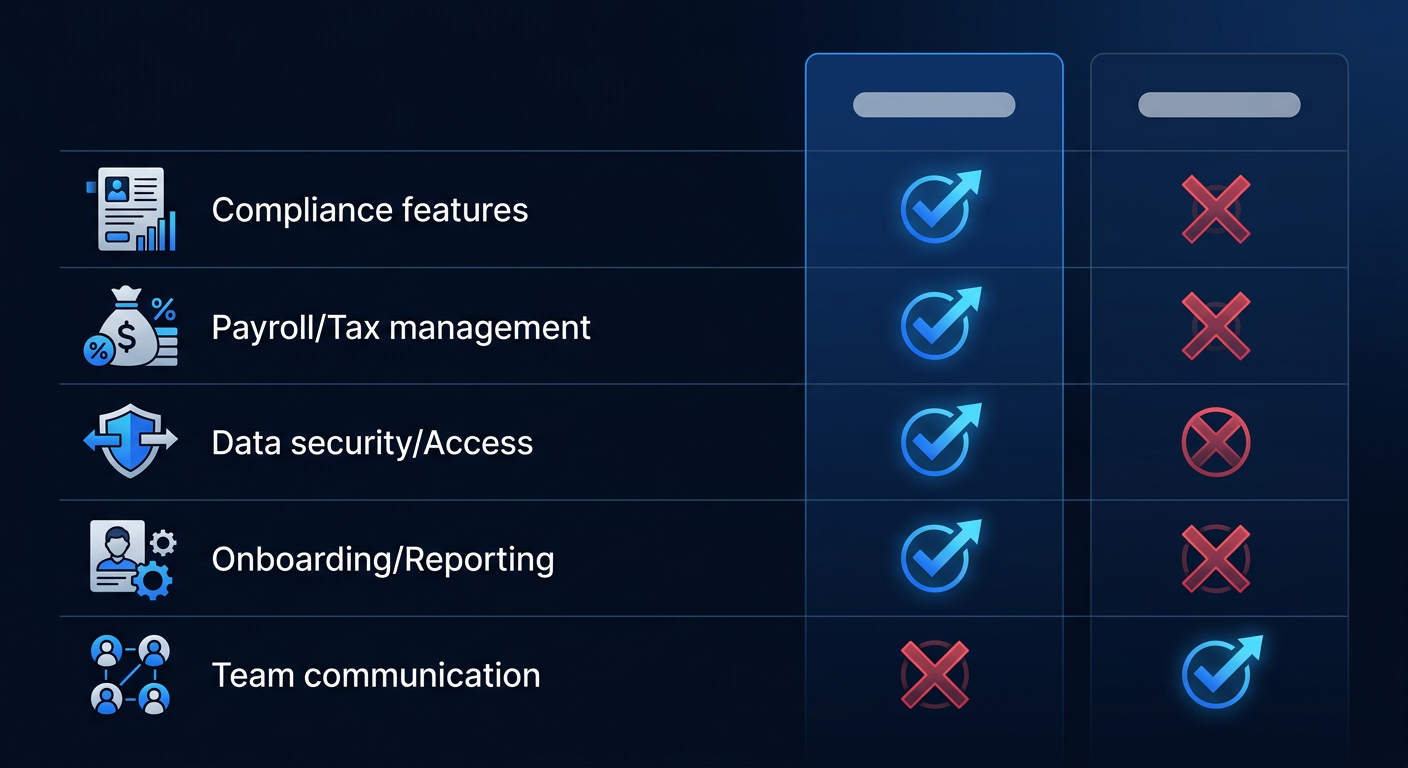
Below is a high-level comparison to help small businesses weigh trade-offs across typical HR compliance software categories. Use it to align feature depth and cost with your risk profile and headcount plan.
| Category | Ideal Team Size | Compliance Depth | Notable Strengths | Common Trade-offs | Typical Pricing Model |
|---|---|---|---|---|---|
| Best overall | 20–250 | Broad, multi-state | Automated updates, strong audit logs | Fewer custom reports at base tiers | Per-employee with add-ons |
| Very small teams | 1–40 | Core essentials | Guided setup, low admin overhead | Limited analytics, lighter state depth | Low per-employee, monthly |
| Multi-state leader | 50–500 | City/state granular | Predictive scheduling, jurisdiction-aware timecards | Steeper learning curve | Mid-high per-employee |
| Regulated industries | 25–400 | Governance-grade | Field-level logs, retention automation | Heavier admin, higher setup fees | Modular packs + seats |
| Global teams | 10–600 | Country-focused | Data residency, localized onboarding | Needs partners for payroll in some regions | User fees + regional packs |
Sources
U.S. Department of Labor Wage and Hour Division compliance assistance U.S. Citizenship and Immigration Services I-9 Central IRS Affordable Care Act Information for Applicable Large Employers
AtlasProfitAI publishes independent guides for small-business teams. Read how we choose topics and check our work in our research methodology and advertising disclosure.